
A good night’s sleep is crucial for both your physical and mental health. Yet around 1 in 5 people in the UK aren’t getting the rest they need, leading to increased stress, weakened immune systems, and a whole lot of yawning.
The good news? This is a problem with a number of solutions.
One of the most effective and often overlooked ways to improve your sleep is by focusing on your bedroom itself. Creating a cosy haven that prioritises sleep hygiene (the beneficial practices that promote better rest) could make it easier to drift off and get 7 to 9 hours of quality sleep every night.
Interested? Learn how to design your bedroom for a perfect night’s sleep in this helpful guide brought to you in collaboration with Hillarys.
Reduce light in your space
Your body has a natural cycle of waking and sleeping, known as your circadian rhythm. This is like your body’s internal 24-hour clock, and it utilises biological processes, like temperature regulation and hormone release, to dictate when you feel sleepy.
Importantly, your circadian rhythm relies on light. Exposure to bright light is a trigger for your body to stay awake, while darkness is a sign for your body to promote sleep.
If you’re struggling to sleep, it could be that too much light is confusing your rhythm and suppressing melatonin (the sleep hormone). A bedroom where you can control the light might be a quick answer to a tricky problem.

Start by making your space darker. Blackout curtains are a fantastic option for blocking out the late summer sun and bright, early mornings. Opt for a made-to-measure option, like those available at Hillarys, to ensure there aren’t any gaps letting the light in.
“Layering blackout Roman or Roller blinds with blackout curtains is the most effective way to block out light and create a truly dark, cocooning space,” says Yvonne Keal, senior product manager at Hillarys. “For even more control, consider smart electric blinds that can be programmed to close at the same time each evening. This helps signal to your body that it's time to wind down, supporting your natural circadian rhythm and preparing your sleep environment ahead of bedtime,”
You can also reduce the brightness of your space with lamps and dimmable light bulbs. Warm, soft bulbs with either red or amber light are ideal for a restful bedroom.
Struggle to wake up in the morning? To reduce the number of times you snooze your alarm, use a sunlight alarm clock to regulate your circadian rhythm. This mimics the rise of the sun, helping you wake up naturally and gently.
Keep allergens at bay
Allergens are a sure way to mess up a perfect night’s sleep. Reduce sneezing, coughing, and itchy eyes by implementing methods of reducing potential allergens in your bedroom.
If you have carpeted floors, for instance, you might want to reconsider your choice. Carpets trap allergens like dust mites, pollen, and pet fur, making your symptoms a whole lot worse. Switch to an allergy-friendly flooring instead, like luxury vinyl tile (LVT). “With LVT, you get more than just a beautiful floor. You’re investing in a healthier home,” says Rebecca Bowers, product manager at Karndean Designflooring UK & Europe. “Whether you're managing asthma, battling allergies or simply want a fresher space, LVT delivers both style and substance. So kick off your shoes, breathe easy and enjoy the comfort of a cleaner, allergen-reducing floor beneath your feet.”

Floor pictured: Traditional Character Oak (left) from our Knight Tile collection and Clay Artisan Oak (right) from our Art Select collection.
From the contemporary aesthetic of Clay Artisan Oak to the old English look of Traditional Character Oak, LVT is a beautiful and versatile choice that’s far easier to clean, creating an allergen-free bedroom.
You can also reduce airborne allergens by investing in an air filter. Look for a model with a HEPA filter, which can capture tiny particles in the air, including pollen and dust.
Regulate your bedroom’s temperature
Temperature plays a major role in how quickly you fall asleep and the quality of your rest. If your bedroom is too warm, you’ll likely spend the night tossing and turning, while a cold bedroom is bound to wake you up.
Ideally, your bedroom should be between 15.6°C to 18.3°C for deep, high-quality sleep.
When designing your space, consider ways of regulating temperatures. This might include using light-filtering blinds in the summer that reduce the amount of hot sunlight streaming into your bedroom, and thermal curtains in the winter.
“Temperature is just as important as light when it comes to sleep quality,” says Yvonne Keal, senior product manager at Hillarys. “Thermal curtains are a great solution for helping to regulate bedroom temperature, especially during colder months. They add an insulating layer at your windows, helping to keep warmth in and draughts out – all while bringing a soft, comforting look to your space.”
Fans are another useful way of cooling down a room. In your bedroom at night, place your fan by your window so that it faces into your home and draws in the cooler air from outside. Pop a bowl of ice in front of your fan to maximise the cooling effect.

Opt for breathable bedding
Whether winter or summer, breathable bedding is a must! Natural fabrics that allow airflow prevent you from becoming clammy and sweaty as you sleep, helping you achieve the perfect night’s rest.
Top fabric choices for your duvet and pillow covers include cotton, bamboo, and linen, all of which are breathable and lightweight. Duvets made of natural fillings like modal, down, and wool are great for regulating your body temperature and wicking moisture away from your skin.
In warmer months, look for duvets with a lower tog rating (between 3 and 7.5), and in winter, switch to something slightly heavier (around 10.5 to 13.5) to stay snug without overheating. Pair your duvet with a breathable mattress protector, switching it from cooling to thermally insulating depending on the season.

Soundproof your bedroom
Whether from traffic, neighbours, or next door’s dog, noise can disrupt your sleep. Explore small ways of soundproofing your bedroom to reduce the number of times you’re woken up.
Thick, lined curtains or Roman blinds can help block sound from the outside. For apartments, rugs and soft furnishings can absorb noise between floors and reduce overall sound levels within your space. “Our rigid core (click-lock) flooring is designed with an acoustic foam backing that helps absorb sound and reduce noise transfer,” says Rebecca Bowers, product manager at Karndean Designflooring UK & Europe. “It’s a great choice for creating a quieter home, particularly in upstairs bedrooms, playrooms or attic conversions where sound control really matters.”
If noise from your neighbours is a real problem, you could also try acoustic panels that are specifically designed to absorb sound. These won’t soundproof your bedroom, but can help make the noise levels more manageable.
If all else fails, add a pair of earplugs to your nightstand. When you wake up from a deep, undisturbed sleep, you’ll be happy you have them!
Use biophilic design to promote calm
Your sleep-friendly bedroom isn’t just about physical comfort. Creating a space that promotes mental calm is a fantastic way of helping you drift off easily, too.
Explore how you can use biophilic design to get in the right headspace for sleep. This is a form of designing interiors to incorporate natural elements, and it’s been found to reduce stress and anxiety so that you can create your own calming sleep sanctuary.
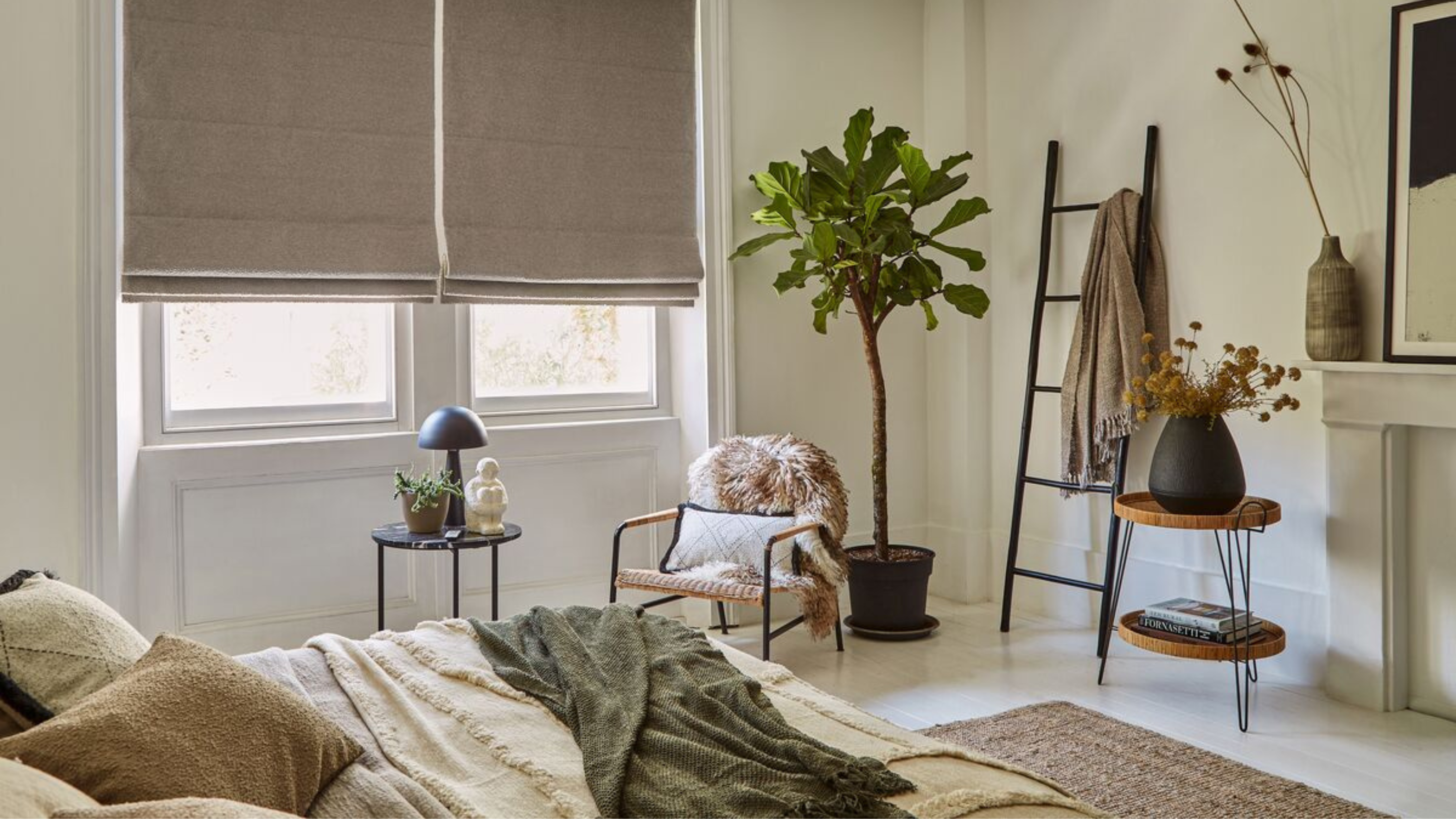
Things to try in the bedroom to incorporate biophilic design include:
- Choosing an earth-toned colour palette (think deep blues, rusty reds, terracottas, and plenty of neutrals).
- Adding nature-inspired art.
- Creating an indoor jungle of houseplants.
- Opting for curved furniture and decor that mimics natural shapes.
- Sticking to natural fabrics for your throws and cushions.
- Using natural materials like wood, rattan, and jute for furniture and decor.
- The finishing touch? A playlist of calming nature sounds to help you drift off into a deep, high-quality sleep.
Final thoughts
Sleep doesn’t always come easily. If you struggle to get a good night’s rest or just want to improve the quality of your 8 hours, we hope the tips in this article provide plenty of inspiration for your sleep-friendly bedroom.
Inspired to switch up your flooring? Take a peek at the best flooring for your bedroom and ditch allergy-inducing carpets for a sneeze-free sleep.
Guest author: Yvonne Keal